For service and trade companies, subcontractors are often an essential part of delivering work efficiently and meeting customer demand. Electrical contractors, plumbers, HVAC engineers, gas engineers, fire and security specialists, cleaners, maintenance companies and facilities management providers may all rely on external teams to provide additional skills, capacity or specialist expertise.
Using subcontractors can provide significant operational benefits, particularly when businesses need to respond to fluctuating workloads, cover different geographical areas or deliver specialist services. However, outsourcing work also means that the company remains responsible for ensuring that the subcontractors it uses are appropriately qualified, insured, competent and compliant with the requirements of the work they are carrying out.
This makes effective subcontractor management an important part of running a professional service or trade business.
What Is Subcontractor Accreditation?
Subcontractor accreditation refers to the qualifications, certifications, memberships, approvals and other compliance requirements that demonstrate that an individual or company is suitably qualified and approved to carry out particular types of work.
The exact requirements will vary depending on the industry, type of work and requirements of individual customers. Records may include recognised trade accreditations, health and safety certifications, professional memberships, training certificates, insurance documents and evidence of competence.
For some businesses, this could include accreditations such as NICEIC, NAPIT, CHAS, Constructionline or SafeContractor. Other requirements may include public liability insurance, professional indemnity insurance, employers’ liability insurance, gas or F-Gas qualifications, DBS checks where appropriate, risk assessments, method statements and other supporting documentation.
Keeping track of all these requirements can become increasingly difficult as a business works with more subcontractors.
Why Is Subcontractor Compliance So Important?
Allowing a subcontractor to carry out work without the appropriate accreditation, insurance or documentation can expose a business to unnecessary operational and compliance risks.
For example, an insurance policy may have expired, a certification may no longer be valid, or a required accreditation may need to be renewed. If these dates are recorded manually in spreadsheets, calendars or individual files, it can be difficult to maintain a clear and reliable overview of the current status of every subcontractor.
This becomes particularly challenging for companies managing a large supply chain or working across multiple service areas.
Regular subcontractor checks can help businesses ensure that the people carrying out work on their behalf continue to meet the required standards. It also provides greater confidence when subcontractors are being allocated to customer jobs, particularly where work involves safety-critical systems, commercial premises, occupied buildings or specialist equipment.
For facilities management companies, the importance of this can be even greater. Subcontractors may be working on behalf of the main contractor in schools, offices, hospitals, retail premises, industrial sites and other occupied environments. Customers increasingly expect contractors to demonstrate that their supply chain is properly controlled and that everyone working on their sites has been appropriately vetted and approved.
The Challenges of Managing Subcontractor Records
As the number of subcontractors increases, so does the amount of information that needs to be maintained.
A business may need to keep records of:
- Subcontractor contact details
- Services and areas of expertise
- Accreditations and certifications
- Insurance policies and expiry dates
- Training and competency records
- Professional memberships
- Health and safety documentation
- Risk assessments and method statements
- Contracts and agreements
- Previous jobs and work history
- Performance information
- Customer-specific requirements
- Signed compliance documents
Keeping this information in different spreadsheets, folders and email conversations can make it difficult to establish an accurate picture of a subcontractor’s current status.
It can also create additional administrative work. Staff may need to search through emails to find certificates, manually check expiry dates, contact subcontractors for updated documents and then update internal records.
The problem becomes particularly significant when several members of staff are involved in managing subcontractors. Without a centralised system, information can quickly become duplicated, outdated or difficult to locate.
Expiry Dates Need to Be Actively Managed
One of the most important aspects of subcontractor compliance is keeping track of expiry dates.
It is not enough to store a copy of an insurance certificate or accreditation document. Businesses also need to know when that document expires and have a process for making sure it is renewed before the expiry date.
A subcontractor could have been fully compliant when they were originally approved but become non-compliant several months later simply because an accreditation or insurance policy has expired.
A good subcontractor management process should therefore provide visibility of upcoming expiry dates and give the business enough warning to obtain updated documentation.
This allows the business to contact subcontractors in advance, request replacement certificates and update its records before the existing documentation expires.
Managing Subcontractors Across Multiple Jobs
Compliance is only one part of effective subcontractor management.
Businesses also need to know which subcontractors are available, what services they provide and where they have previously worked. Having access to a subcontractor’s job history can help office and operational teams make more informed decisions when allocating work.
For example, a subcontractor with experience working on a particular type of equipment or within a particular environment may be better suited to a specific job than a subcontractor without that experience.
A centralised subcontractor record can provide a useful overview of previous work, availability, performance and areas of expertise. This can make scheduling and job allocation more efficient while helping businesses maintain better oversight of their external workforce.
Keeping Documentation in One Place
Another important consideration is document management.
Subcontractor documentation can quickly build up, particularly for companies working with a large number of external engineers and specialist contractors. Contracts, insurance certificates, accreditation documents, compliance forms, training records and other paperwork all need to be accessible when required.
A centralised document management system makes it easier for authorised staff to find the information they need without searching through individual email accounts, computer folders or paper records.
It can also provide a clear history of documents and approvals, helping businesses demonstrate how subcontractors have been assessed and managed.
Making Subcontractor Approvals More Efficient
The process of approving a new subcontractor can involve a considerable amount of administration.
Documents may need to be requested, reviewed, approved and signed before a subcontractor can begin working. If this is handled entirely through email, it can be difficult to track what has been received, what is still outstanding and which documents have been approved.
Digital workflows can simplify this process by allowing contracts, compliance forms and other documents to be sent directly to subcontractors for review and electronic signature.
This reduces paperwork and creates a clearer audit trail, while helping businesses complete the approval process more efficiently.
How Atom Job Management Software Can Help
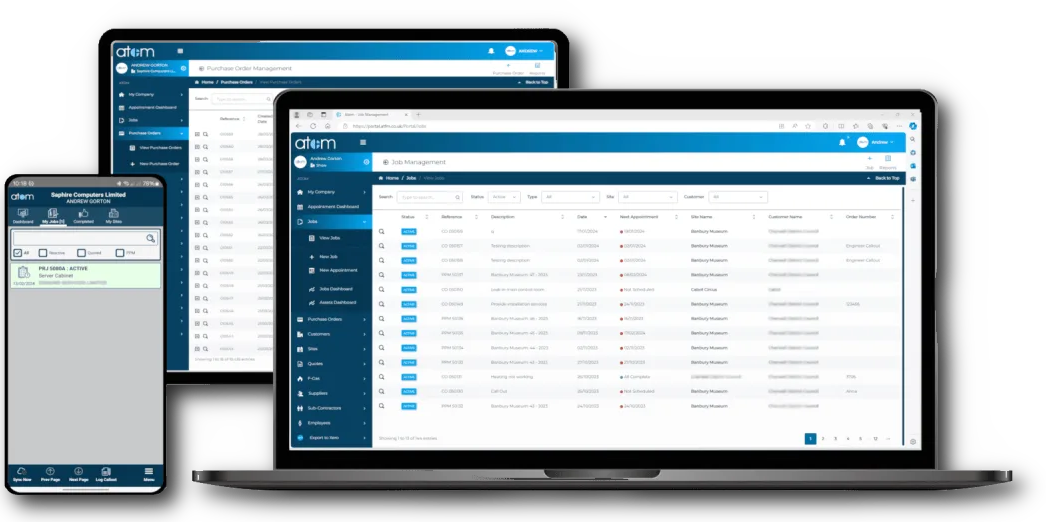
Atom Job Management software includes a comprehensive subcontractor management module designed to help service and trade companies manage their external workforce while maintaining greater control over compliance and documentation.
The system allows businesses to maintain detailed subcontractor records, including contact information, job history and other relevant information. This provides a centralised view of the subcontractors a business works with and makes it easier to find the information required when planning and allocating work.
Atom also provides tools for managing subcontractor accreditations, associations and insurance records. Businesses can record relevant qualifications, certifications and insurance information alongside the subcontractor’s main record, helping keep important compliance information together.
Expiry dates can also be recorded, with Atom able to send email notifications when accreditations and insurance documents are approaching their expiry dates. This gives businesses an opportunity to request updated documentation before existing records become out of date.
For companies managing multiple subcontractors, this can reduce the reliance on spreadsheets and manual diary reminders while providing a much clearer overview of upcoming compliance requirements.
Subcontractor Documents and E-Signatures
Atom also includes document management functionality, allowing businesses to send contracts, compliance forms and other documents directly to subcontractors for online review and e-signature.
Once documents have been completed and signed, they can be retained within the system, providing a centralised record of the documentation associated with each subcontractor.
This can help reduce administration, improve visibility and provide an auditable history of important subcontractor documentation.
Managing Subcontractors as Part of the Wider Job Management Process
One of the benefits of managing subcontractors within Atom is that subcontractor information can form part of the wider operational process rather than being maintained separately.
Subcontractors can be managed alongside customers, sites, jobs, scheduling, documentation and other operational information. This gives businesses a more connected view of the work they are delivering and the external teams involved in delivering it.
For businesses that rely heavily on subcontractors, having this information available within the same system can help reduce duplication and make it easier for office and operational teams to manage day-to-day activities.
Building a More Controlled Subcontractor Management Process
Effective subcontractor management is about more than simply keeping a list of contractors.
Businesses need to know who they are working with, what services they provide, whether their required accreditations and insurance are current, what documentation has been received and when important records need to be renewed.
A structured approach can help businesses reduce administrative workload, improve visibility of their supply chain and demonstrate that appropriate checks are being carried out.
For service and trade companies, this can support safer working practices, stronger compliance, smoother job management and greater confidence when dealing with customers, auditors and procurement teams.
By bringing subcontractor records, accreditation tracking, expiry reminders, documentation and job information together, businesses can move away from fragmented spreadsheets and paperwork towards a more organised and manageable process.
Atom Job Management software provides a centralised way to manage subcontractors, track accreditations and insurance, store important documents, manage approvals and receive reminders when key records are approaching expiry. To find out more about how Atom can help your business manage subcontractors and day-to-day operations, visit https://atfm.co.uk.